Credit Transfer allows students to continue their education by carrying forward the academic credits they have already earned, helping them complete their degree without repeating equivalent subjects.
Credit Transfer means getting recognition for the subjects or courses you have already passed in one college or university, so you do not have to study them again in the new institution.
In simple terms, it is like carrying forward your completed academic credits from one recognised institution to another. The receiving university evaluates your completed subjects and decides which credits are equivalent and can be transferred.
If you completed one semester in one university and later joined another, the new university may accept your previously completed subjects and allow you to continue from the next semester instead of starting again.
Modway International Academy is one of Kerala's trusted institutions for students who wish to complete their B.Tech degree through the Credit Transfer system. We provide a structured, transparent, and student-friendly pathway for students who have discontinued their engineering education to continue their academic journey without starting over. In collaboration with UGC and AICTE approved universities, we ensure admission into recognized programs that are valuable for higher education, employment, and future career opportunities.
At Modway, every student receives personalized academic counselling to assess earned credits, eligibility, and the appropriate semester for admission. Our team manages the complete process, including admission guidance, documentation, credit mapping, university coordination, and continuous academic support until graduation. With dedicated mentoring and end-to-end assistance, Modway has become a preferred destination for students seeking a genuine second opportunity to complete their B.Tech after discontinuing due to backlogs, financial constraints, relocation, personal commitments, or institutional challenges.
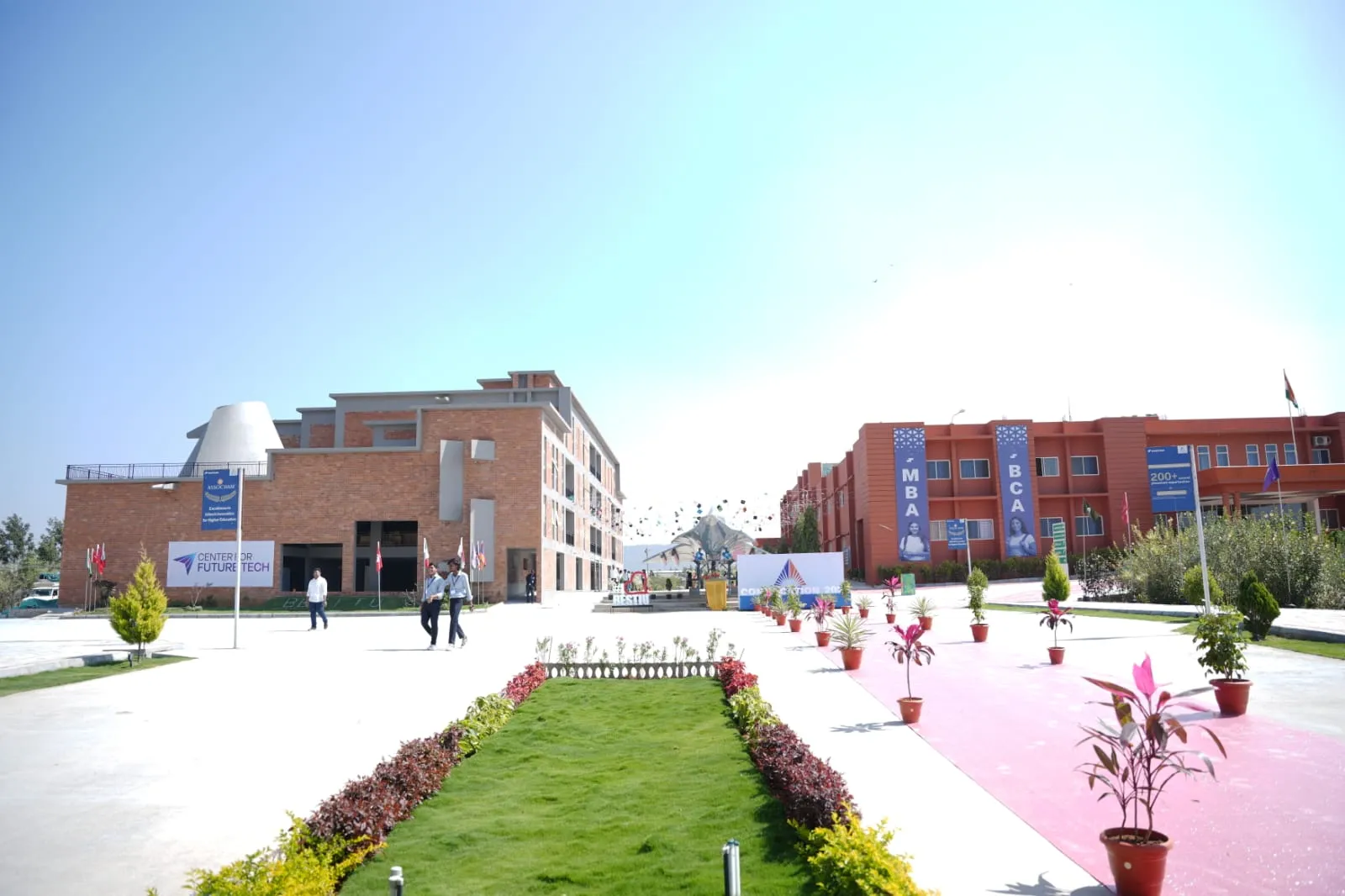
In a B.Tech program, credits represent the academic weight assigned to each course. Most universities follow the Choice Based Credit System (CBCS) prescribed by AICTE and UGC, making academic progress structured and transparent.

Credits measure the amount of academic work completed through lectures, tutorials and laboratory sessions. They help universities evaluate student progress and facilitate credit transfer between recognised institutions.
The Choice Based Credit System (CBCS) followed by universities assigns credits to every subject based on lectures, practical sessions, projects and overall academic workload.
| Component | Credit Weightage | Remarks |
|---|---|---|
| Theory Courses | 3 – 4 Credits Each | Core Engineering Subjects |
| Laboratory / Practical | 1 – 2 Credits | Experiments & Workshops |
| Project / Seminar / Internship | 2 – 10 Credits | Depends on Semester |
| Humanities / Management Electives | 2 – 3 Credits | Communication, Ethics etc |
| Open / Department Electives | 3 – 4 Credits | Offered in later Semesters |
| Year | Semesters | Average Credits per Semester | Total Credits |
|---|---|---|---|
| 1st Year | Semester I & II | 20 – 24 | 40 – 48 |
| 2nd Year | Semester III & IV | 22 – 25 | 44 – 50 |
| 3rd Year | Semester V & VI | 22 – 26 | 44 – 52 |
| 4th Year | Semester VII & VIII | 18 – 24 | 36 – 48 |
| Total | 8 Semesters | — | 160 – 180 (approx) |
We collaborate with recognised universities and institutions approved by statutory bodies to ensure quality and credibility.
Ramgarh, Jharkhand
Andhra Pradesh

Over the past eight years, Kerala has produced nearly two lakh engineering students from various colleges. However, only about half of them were able to successfully complete their B.Tech degree. Many students had to discontinue their education due to academic backlogs, institutional challenges, financial constraints, relocation, or personal circumstances.
This has left thousands of students with incomplete qualifications despite possessing valuable technical knowledge and practical skills. The B.Tech Credit Transfer Program provides these students with a structured opportunity to resume their education and complete their engineering degree through recognised Indian universities, without restarting the course from the beginning.
Credit Transfer is an academic process that enables a student to transfer the academic credits earned from one UGC or AICTE approved institution to another. This allows students to continue their education without repeating subjects that have already been successfully completed.
The system promotes academic flexibility, student mobility, and lifelong learning as envisioned under the National Education Policy (NEP) 2020. It is also supported through the Academic Bank of Credits (ABC), enabling students to securely store and transfer academic credits across recognised institutions.
Explore the purpose, eligibility, process, conditions and benefits of the Credit Transfer System followed by recognised universities.
The Credit Transfer Program aims to:
To be considered for B.Tech Credit Transfer, students should generally meet the following eligibility requirements:
The student applies for credit transfer by submitting academic transcripts, syllabus copies and a migration certificate.
The university evaluates course equivalency based on course content, learning outcomes and credits earned.
The Academic Equivalence Committee validates the credits and approves eligible transfers.
Approved credits are recorded in the Academic Bank of Credits (ABC) account and adjusted toward the new university's program structure.
Credit Transfer offers several advantages that help students continue their education with greater flexibility and convenience.
India's Credit Transfer system is supported by the National Education Policy (NEP) 2020 and regulated through the University Grants Commission (UGC), providing students with a recognised and flexible pathway to continue higher education.
The National Education Policy (NEP) 2020 is India's comprehensive education reform introduced by the Ministry of Education and approved by the Union Cabinet. It provides a modern framework for school and higher education by promoting quality, accessibility, flexibility, multidisciplinary learning and lifelong education.
One of the major reforms introduced under NEP 2020 is the Academic Bank of Credits (ABC), which enables students to earn, store and transfer academic credits between recognised institutions while supporting multiple entry and exit opportunities in higher education.
The National Education Policy is issued by the Government of India through the Ministry of Education and approved by the Union Cabinet. The Ministry coordinates the implementation of education reforms across the country.
The University Grants Commission (UGC) develops guidelines and quality standards for Credit Transfer. Individual universities implement these guidelines and make the final decision after evaluating course equivalency.
The Academic Bank of Credits (ABC) is a digital academic repository introduced under NEP 2020 that enables students to securely store, manage and transfer academic credits earned from recognised higher education institutions.
Credits earned from recognised institutions are securely stored in the student's Academic Bank of Credits account.
Stored credits can be transferred while continuing studies at another recognised institution.
The receiving university verifies course equivalency before approving the transferred credits.
Important: Credit storage in ABC does not guarantee automatic transfer. The receiving university makes the final decision according to its Credit Transfer Policy and Equivalence Committee.
Credit Transfer is designed for students who want to continue their education without losing the academic progress they have already achieved.
Students who wish to transfer from one engineering college or university to another.
Students who discontinued their B.Tech and want to resume their engineering education.
Students who have shifted to another city or state and need admission to a new institution.
Professionals planning to continue and complete their engineering degree after a career break.
Students who want to avoid repeating completed subjects and finish their degree in less time.
Keep the following documents ready to ensure a smooth and hassle-free Credit Transfer application process.
Semester-wise academic marksheets.
Official academic transcripts.
Previous admission letter or ID.
TC issued by the previous institution.
Required wherever applicable.
Aadhaar or other valid ID proof.
Recent passport-size photographs.
Additional documents if requested.
Continue your education without starting over. Through the Credit Transfer system, Modway International Academy guides students in completing undergraduate and postgraduate programs offered by recognised universities.
Students who have discontinued their undergraduate studies or wish to continue at another institution can complete their degree through Credit Transfer, subject to university eligibility.
Whether you have discontinued your undergraduate studies or wish to continue your education at another institution, Credit Transfer offers a flexible pathway to complete your degree. Modway International Academy provides guidance for students seeking admission to various undergraduate programs through the Credit Transfer process.
A Bachelor of Arts (BA) is a versatile undergraduate degree that develops critical thinking, communication, analytical, and problem-solving skills. Students can choose from subjects such as English, History, Political Science, Economics, Sociology, Psychology, and more.
A Bachelor of Science (BSc) provides in-depth knowledge in scientific disciplines by combining theoretical concepts with practical learning. Popular specializations include Mathematics, Physics, Chemistry, Computer Science, Biotechnology, Zoology, Botany, and Environmental Science.
The Bachelor of Business Administration (BBA) equips students with essential knowledge in business management, finance, marketing, entrepreneurship, human resources, and operations. It develops leadership and managerial skills, preparing graduates for careers in corporate organizations, startups, banking, and management roles.
A Bachelor of Commerce (BCom) focuses on accounting, finance, taxation, economics, auditing, business law, and financial management. It prepares students for careers in accounting, banking, financial services, taxation, insurance, auditing, and corporate finance.
Students who wish to continue their postgraduate education after a break or transfer from another institution can also explore PG programs through Credit Transfer.
Students looking to continue their postgraduate education after a break or transfer from another institution can also explore various PG programs through the Credit Transfer system, subject to the eligibility criteria of the respective university.
A Master of Arts (MA) offers advanced study in humanities, social sciences, and liberal arts disciplines. It enhances research, analytical, and communication skills while preparing students for professional and academic careers.
A Master of Science (MSc) provides specialized knowledge in scientific and technical subjects through advanced coursework and research. It equips students with advanced analytical and practical skills in scientific industries.
A Master of Business Administration (MBA) is one of the most sought-after professional management degrees. It develops expertise in leadership, strategic management, finance, marketing, operations, business analytics, and entrepreneurship.
A Master of Commerce (MCom) offers advanced knowledge in accounting, finance, taxation, economics, banking, business management, and commerce. It prepares students for professional careers.


Whether you're looking for credit transfer, flexible learning options, or guidance to complete your degree, our academic counsellors are here to help you every step of the way.